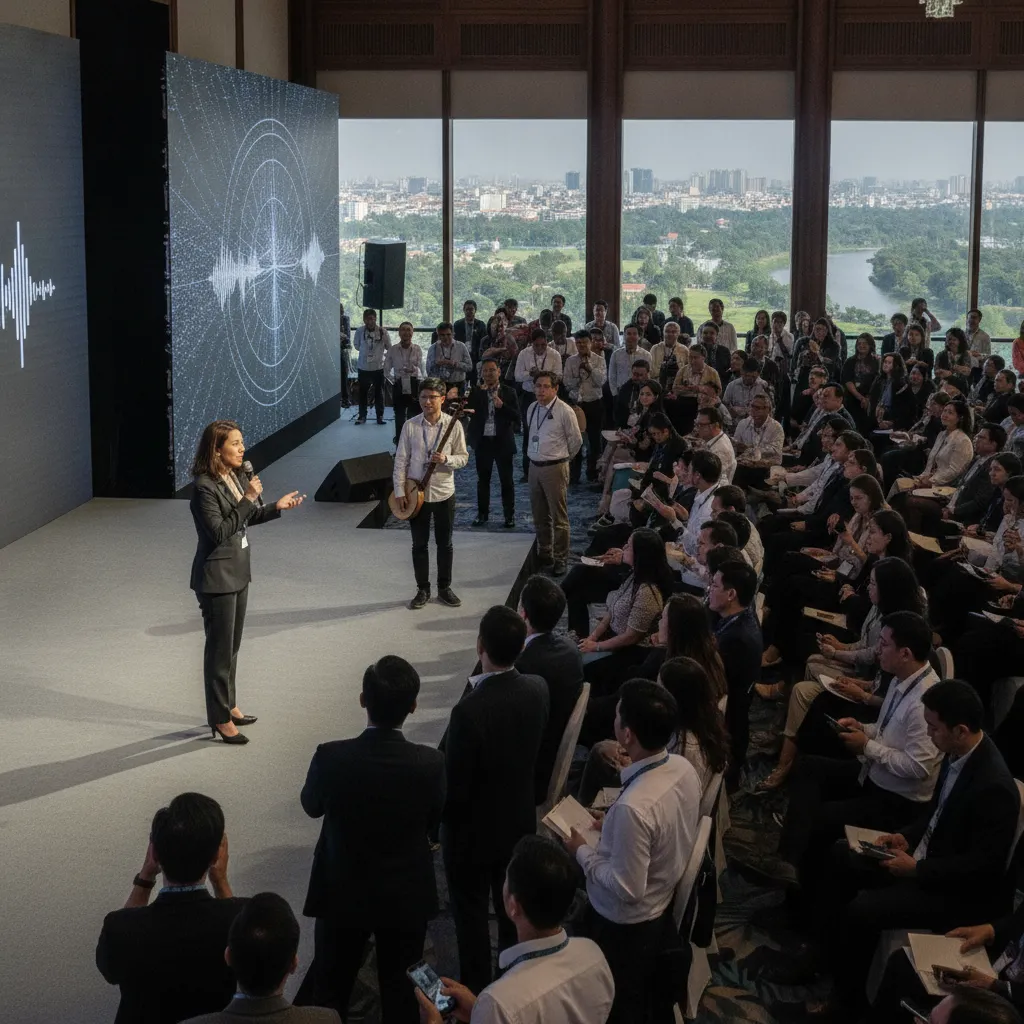
The digital age has fundamentally changed how the world consumes art, turning social media feeds into global stages where a hit song can travel from a bedroom studio to millions of listeners instantly. During the Fortune Southeast Asia 500 Summit in Vietnam, Esther Nguyen, CEO of POPS Worldwide, noted that while platforms like TikTok and Instagram have democratized music distribution, accessibility does not automatically equal scalability. For Southeast Asian artists to reach the same heights as their counterparts in South Korea, Nguyen argues that organic viral growth must be backed by systemic institutional support.
Drawing comparisons to the strategic rise of K-pop, Nguyen emphasized that becoming an entertainment superpower requires more than just talent; it demands a sophisticated ecosystem of government policy and intellectual property protection. She pointed out that regions like Los Angeles, New York, and Tokyo thrive because they possess a specialized class of investors who deeply understand the nuances of the entertainment business. Without similar financial expertise and robust legal frameworks to protect creators’ rights within Southeast Asia, the region risks remaining a collection of untapped potentials rather than a unified global force.
This struggle for scale is compounded by the inherent fragmentation of the Southeast Asian market. Sujey Subramanian of asset manager ICG highlighted a significant gap between investor requirements and local reality, noting that finding individual assets large enough to justify major equity checks remains a challenge. This lack of consolidation makes it difficult for regional players to achieve the critical mass necessary for massive international exports. The conversation shifted toward the idea that exporting content alone isn’t enough; instead, nations must cultivate an overall desire for their broader culture—including food and lifestyle—to create sustainable demand for their artistic output.
Beyond legislation and funding, panelists stressed the importance of physical infrastructure to sustain artist growth. Kenny Ong of Sony Music suggested that while stadium shows capture headlines, there is a desperate need for mid-sized and small venues that allow emerging acts to build their fanbases incrementally. Combined with a resurgence in physical collectibles like vinyl and CDs, these tangible touchpoints provide essential revenue streams beyond streaming royalties. While challenges remain regarding copyright enforcement, Nguyen expressed optimism that recent governmental crackdowns on piracy signal a turning point toward a more mature and profitable creative economy in the region.