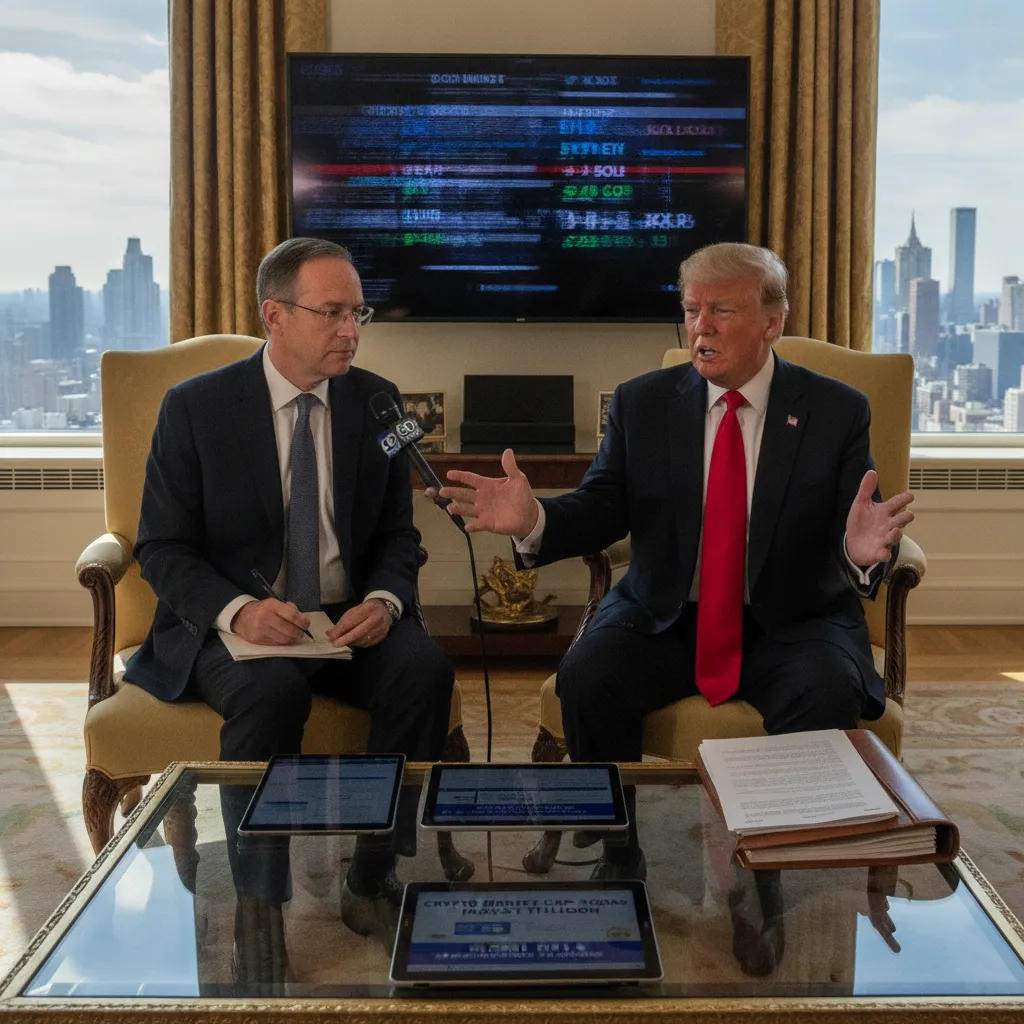
President Donald Trump dismissed concerns regarding a massive spike in his personal wealth during a recent appearance on 60 Minutes, attributing the growth to savvy investments rather than political influence. When asked by correspondent Ross Douthat about how his net worth jumped by more than 3 billion dollars since the start of his second term, the president offered a blunt response, telling Douthat that he simply should have owned stock. Trump claimed he pays little attention to his specific finances, noting that his son Don Jr. manages the money while he focuses on the presidency without taking a government salary.
Financial disclosures paint a picture of a portfolio heavily shifted toward digital assets and international expansion. According to records released in June, Trump earned over 1 billion dollars from cryptocurrency alone last year. A significant portion of this windfall came from the sale of the Trump meme coin and ventures tied to World Liberty Financial. These gains were supplemented by hundreds of millions of dollars from stablecoin investments and equity sales involving partners linked to the United Arab Emirates.
Beyond the volatile world of crypto, the president continues to monetize his brand across several continents. Licensing fees for skyscrapers and golf courses have poured in from Qatar, Romania, India, Vietnam, and various cities across Saudi Arabia and the UAE. Specifically, high rise projects in Dubai and luxury developments in Riyadh have contributed tens of millions to his bottom line, reinforcing a global business footprint that persists despite his role as head of state.
During the interview, Trump defended these ongoing operations by arguing that it would be impractical to freeze his family’s businesses for four years. While Douthat suggested that current administrations typically avoid such deep financial entanglements, Trump countered that his unique status as a global brand makes his situation different from previous presidents. This admission comes at a precarious moment for the administration, as Democrats prepare to launch aggressive oversight investigations into these overseas interests following Republican losses in the midterm elections.