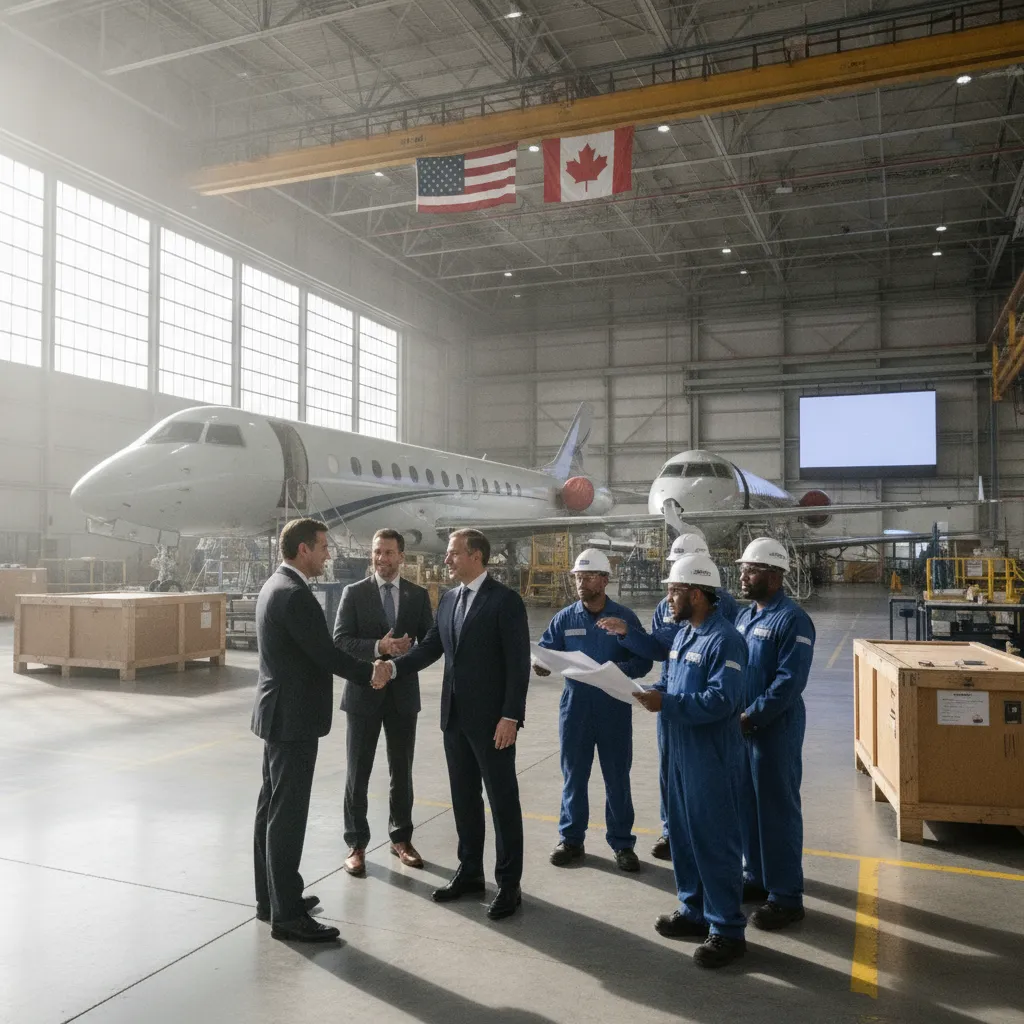
Canadian aerospace leader Bombardier is making a significant strategic shift toward the United States, announcing a 270 million dollar investment aimed at bolstering its domestic infrastructure and workforce. This move follows a period of tension with the White House, specifically after President Donald Trump suggested back in September that the company should manufacture its jets locally if it wanted to maintain access to the American market. By doubling down on its US presence, Bombardier appears to be aligning itself with the current administration’s push for onshore production.
The expansion plan involves a massive hiring surge, with the company looking to add 800 new positions across several states. While much of this growth will center around their established home base in Kansas, Texas is slated to become a primary hub for future growth, accounting for 150 of those roles. Other expansions are also planned for Indiana and Connecticut, including a sprawling new service facility at Fort Wayne International Airport designed to handle complex maintenance and avionics installations for multiple aircraft simultaneously.
Chief Executive Officer Eric Martel described the decision as a reflection of long term confidence in the American market and praised the constructive dialogue held with government officials. He noted that these investments provide a clear path forward for highly skilled aerospace workers while ensuring the company remains competitive. To support this growth, Bombardier recently inaugurated a North American Learning Center in Wichita, Kansas, focusing on talent development and operational excellence.
President Trump celebrated the announcement on social media, praising Senator Roger Marshall of Kansas for his role in facilitating such deals and framing the investment as part of a larger trend of companies returning to America. For Bombardier, the stakes are high but potentially rewarding; as of 2025, their existing US activities already support over twenty seven thousand jobs and involve billions in supply chain spending, making this latest expansion a critical step in securing their foothold in the world’s largest aviation market.