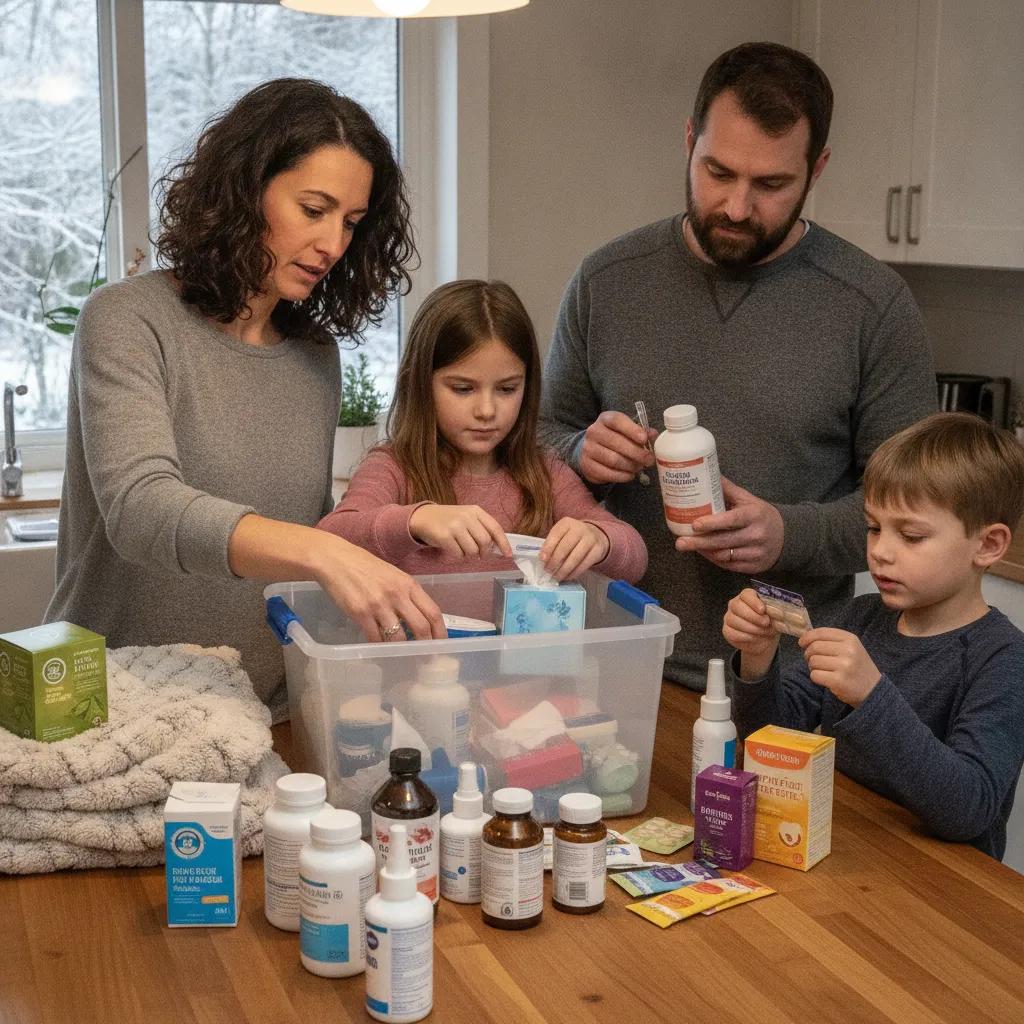
As the mercury drops and the air grows drier, millions of Americans enter the window where respiratory viruses thrive. According to the Centers for Disease Control and Prevention, cold and flu season typically stretches from October through May, leaving households vulnerable to everything from the common cold and RSV to COVID-19. Pediatrician Mona Amin warns that many people face back-to-back illnesses during this time, making it essential to prepare a dedicated sick day kit before the first sneeze happens. Pharmacist Alisha Reed suggests organizing these supplies in one specific spot, such as a designated shelf or box, so you aren’t forced to scramble for essentials while feeling miserable or relying on someone else to make a pharmacy run mid-fever.
When stocking your cabinet, experts recommend avoiding multi-symptom medications that claim to fix everything at once. While tempting, these often contain unnecessary ingredients that increase the risk of accidental overmedication. Instead, focus on targeted treatments for individual symptoms. Pain relievers like ibuprofen or naproxen are effective for inflammation and body aches, while acetaminophen remains a gold standard for reducing fevers and is generally the safest bet for pregnant individuals. To tackle congestion and runny noses, antihistamines used for allergies can dry up sinuses, while pseudoephedrine serves as a strong decongestant to open airways. However, caregivers should be cautious with children’s dosages, noting that many cough suppressants and decongestants are not recommended for toddlers under four.
Beyond traditional pharmaceuticals, simple home remedies and monitoring tools play a critical role in recovery. A reliable thermometer is non-negotiable for tracking fevers, with rectal options preferred for infants and oral ones providing accuracy for adults. For those struggling with a cough but too young for medication, honey acts as a soothing anti-inflammatory—though it must never be given to infants under one year old due to botulism risks. Additionally, nasal saline sprays can prevent viruses from taking hold by keeping mucous membranes moist during harsh winters. By combining these supplies with preventative habits like frequent handwashing and vaccination, families can manage most viral infections comfortably at home without needing prescription antibiotics which do not work against viruses anyway.